Until 30th Nov 2026


Whether you're a startup or a running business, this guide helps you with insights to empower your field service teams and elevate operational proficiency. This buyer’s guide will highlight the nuanced landscape of field service software in detail, so let’s get started.
The field workforce management software includes various aspects for scheduling, dispatching, tracking, and analyzing field operations. Thus invest in this software efficiency and improved customer satisfaction.
Field service management software provides insights into job status, inventory, and customer information. It is vital for industries with mobile service teams, such as maintenance, utilities, and construction. Service business management software that provides services offers a centralized platform for organizing and keeping track of field operations. Ultimately improving productivity, reducing costs, and delivering seamless service experiences.
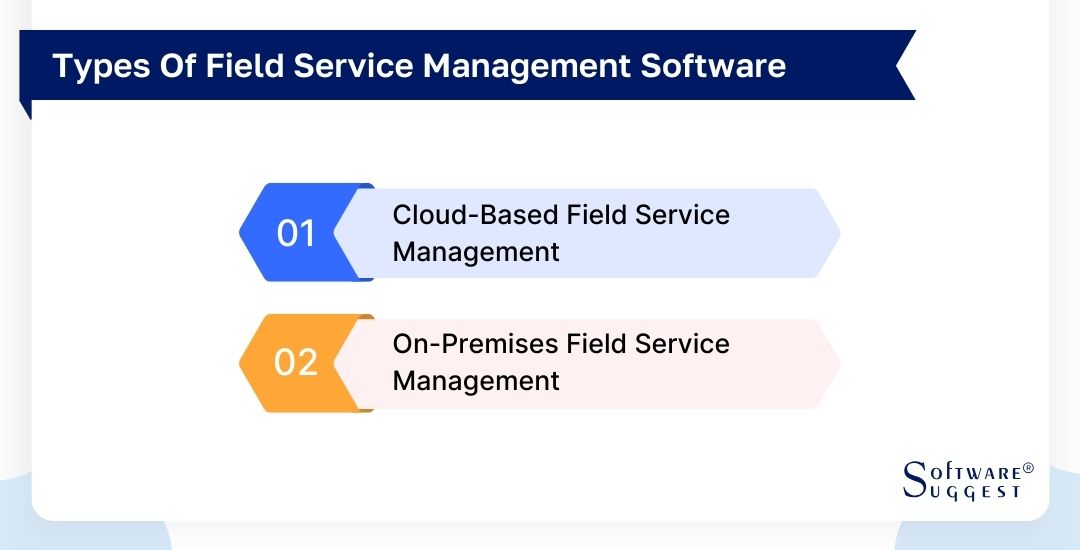
In field management software, businesses encounter a crucial decision point - choosing between Cloud-based and On-premises solutions. Each type holds its unique field service operations, catering to diverse operational needs and organizational structures. Let's see in detail:
-
Cloud-based field service management: Cloud-based FSM Software, considered the avant-garde of the digital era, operates on remote servers accessible via the Internet. This approach unshackles businesses from the constraints of physical infrastructure, offering unparalleled flexibility. Imagine a scenario where your field service operations seamlessly synchronize with the cloud, empowering teams to access real-time data from any location.
-
On-premises field service management: Contrastingly, On-premises field service management software roots itself within the physical infrastructure of an organization. This traditional approach grants businesses direct control over their software and data, appealing to those who prioritize a localized, secure environment. The entire system resides within the company's premises. Hence offering a sense of ownership and tailored customization.
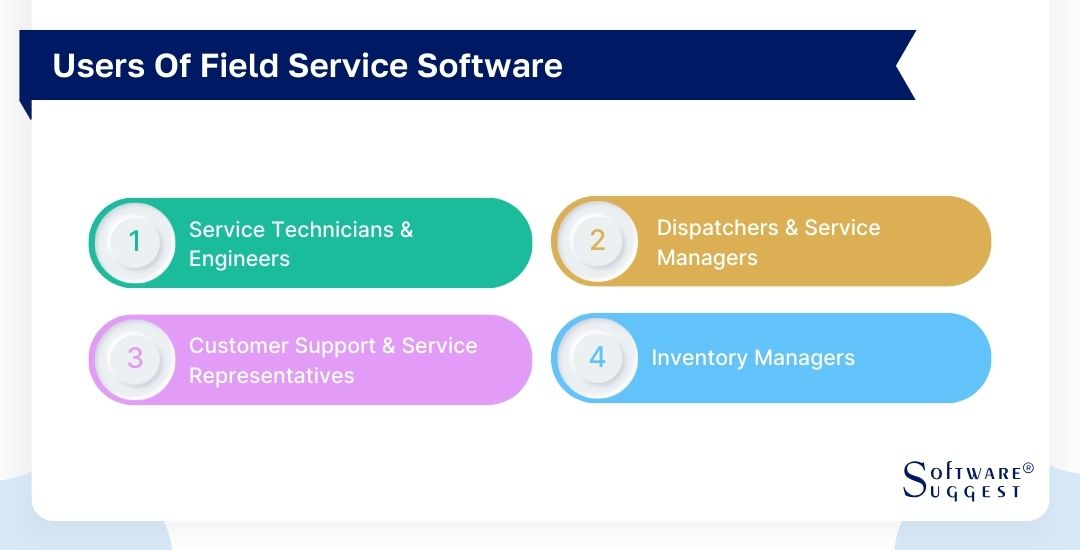
Field service scheduling software is a versatile tool embraced by service technicians, dispatchers, and managers alike. Let's see who are the users of the best field service management software.
-
Service technicians and engineers: Field service management solutions are a cornerstone for service technicians and engineers who operate in the field. It equips them with the necessary software for efficient job scheduling, dispatching, and real-time access to crucial information.
-
Dispatchers and service managers: Top field service management software is used by dispatchers and service managers to coordinate and maximize the use of available assets. The program provides a consolidated environment for managing field service operations such as appointment setting, work allocation, and status tracking.
-
Customer support and service representatives: Customer support and customer service representatives leverage top-free field service management software to enhance communication with clients. They can provide accurate information about service appointments, track service requests, and offer real-time updates in mobile apps to customers.
-
Inventory managers: Field service management software for small businesses is invaluable for inventory managers responsible for maintaining stock levels of equipment and spare parts. Service management software enables real-time tracking of inventory, helping managers optimize stock levels, reduce excess, and ensure that field technicians have the necessary resources for their tasks.
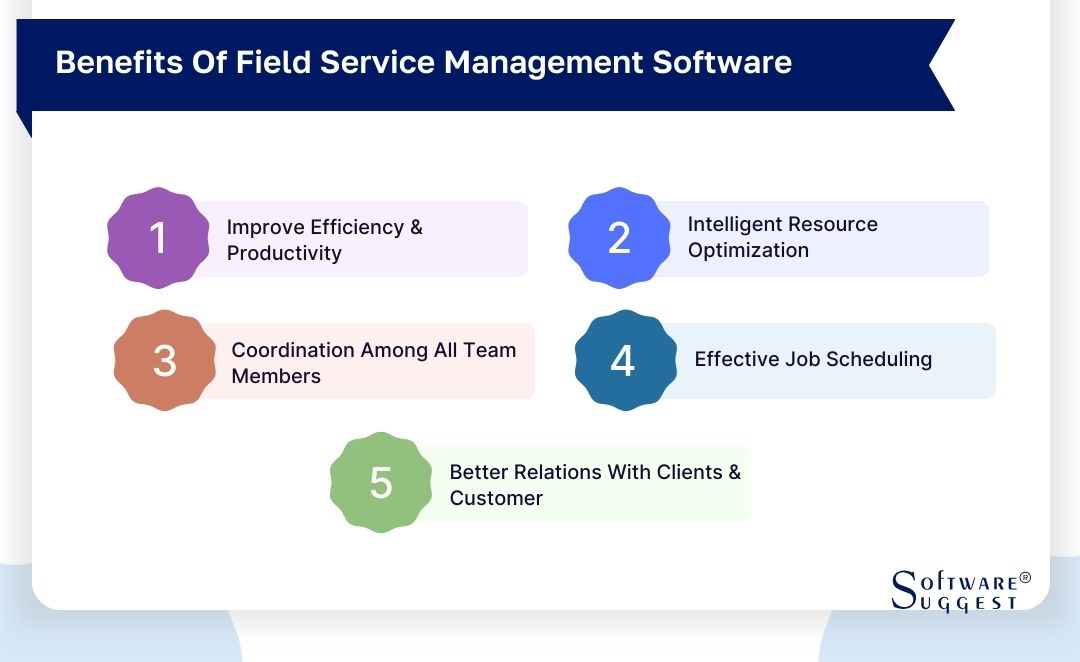
Well-built field service software is the spine of any business as it integrates success with high-level productivity while achieving your business goals. Using best field management software comes with various advantages, which can be stated as:
-
Improve efficiency and productivity
The best field service management software for small businesses optimizes task allocation, scheduling, and real-time communication, minimizing downtime and enhancing overall workflow. By furnishing teams with data-driven insights, it improves the efficiency of the service management system. This leads to increased customer satisfaction in establishments, faster response times, and faster service delivery.
Field service scheduling software's centralized platform ensures seamless integration, fostering a synchronized and cohesive approach that maximizes operational efficiency. In essence, the top-tier field service software for small businesses emerges as a catalyst for elevated productivity and sustained operational excellence.
-
Intelligent resource optimization
Field service management software ensures that all your resources are been utilized properly to yield the maximum output. You can easily optimize the assignment and routing of your man-at-work and can directly augment the profitability with the help of field service management software.
-
Coordination among all the team members
Field service software simplifies the entire field management cycle, including work orders, equipment availability, and the return of the order. As field workforce management software comes with cloud-based integration and mobile app support, you can easily update any team member about any part of the tasks around the clock.
-
Effective job scheduling
While working at live locations, it is essential to conduct effective job scheduling. The best field service software stores all the information regarding the skills of your team members and the nature of the job. You can easily allow the right professional to a particular project. Henceforth, you ensure timely and skilled completion of any project.
-
Better relations with your clients and customer
With the help of field service management software, you can easily strengthen your relationship with your customers and clients. As field service management software comes with easy access, you allow your clients and customers to get in touch with you at any point in time.
In the rapidly evolving landscape of service-oriented industries, leveraging the best service management software has become paramount. Now, let's delve into the key features that distinguish the best field service management tools, focusing on their pivotal role in dispatch management, billing, and invoicing.
-
Job Scheduling and routing
This feature of field service management software ensures that the right candidate is working on the relevant project. The feature is essential from the resource usage point of view.
-
Work Order Management
It is essential for any business service monitoring to ensure that all the orders are managed well in advance. With the help of this feature of your top field service management software, you can easily create orders, create invoices, update the team at file about the order, and so on.
-
Inventory Control
Keeping track of equipment and resources is what makes you perform well. The inventory control feature for your field service management system helps you to check what resources are readily available and what needs to be procured.
-
Dispatch management
Efficient dispatch management stands as a cornerstone of top-tier field service management companies. The ability to optimize resource allocation, track field personnel in real-time, and seamlessly coordinate scheduling and dispatching enhances productivity.
Also, it significantly reduces response times. A robust dispatch management solution empowers organizations to tackle dynamic challenges with agility, ensuring a swift and well-orchestrated field service operation.
-
Billing and invoicing
The best field service technician software goes beyond operational efficacy, extending its impact on the financial domain through comprehensive billing and invoicing features. This includes automated invoicing, transparent billing processes, and the integration of financial data with operational metrics.
Such capabilities not only facilitate faster and error-free transactions but also contribute to a transparent and accountable financial workflow to get paid within the organization.
-
Reporting
Your field workforce management software should be capable enough to deliver smart reports. Tax reports, call counts, work reports, and various other similar reporting should be done effortlessly.
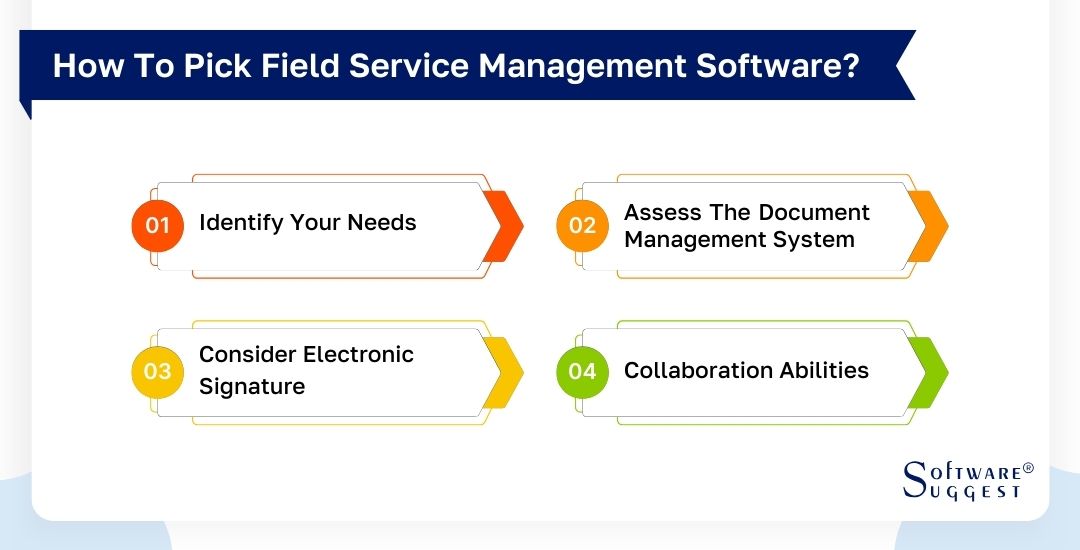
Field service tracking software plays a pivotal role in enhancing the efficiency and productivity of organizations with field-based operations. Choosing the right field service management tools is a critical decision that involves considering various factors to align the field service management software with the unique needs of your business. Let's see in detail:-
-
Identify your needs
The initial phase in choosing the appropriate FSM software is determining the particular demands and specifications of your company. This involves a comprehensive assessment of your workflow, user experience, operational challenges, and long-term goals.
Whether you're in construction, utilities, or any other field service industry, understanding your unique demands will guide you in selecting field service management software. In particular, that eases your discomfort and promotes a smooth integration with your current workflow.
-
Assess the document management system
Efficient document management is essential in field service operations. The chosen field service automation software, like Service Fusion, should offer robust document management software. Thus enabling the establishment to digitize and centralize documents.
This includes work orders, service contracts, and equipment manuals. A user-friendly interface and the ability to access documents remotely are crucial for field personnel who often work in dynamic and challenging environments.
-
Consider electronic signature
In the modern era, transitioning to paperless workflows is not just a trend but a necessity. Seek a platform for managing field services that incorporates electronic signature functionality. This feature streamlines approval processes reduces paperwork, and accelerates service delivery. Electronic signatures not only enhance the overall efficiency of field operations but also contribute to a more environmentally sustainable and cost-effective workflow.
-
Collaboration abilities
Field service operations involve a collaborative effort between various stakeholders, including field technicians, dispatchers, and customer support. Features like real-time messaging, task assignment, and mobile connectivity empower teams to stay connected and share critical information instantly. This enhances response times, reduces errors, and ultimately leads to higher customer satisfaction.
All businesses have a place to work. And then some companies need agents and specialists to go on the field and take care of the work. There are unique ERP software available in the market. However, if the nature of business demands that there are more people working in the field and fewer in-house, you can always switch to software that is more conducive to work requirements.
Companies are expanding, and you don’t need the traditional online software either to keep your business on track. Any business management software that is accessible on the go is a blessing for the entire working unit.
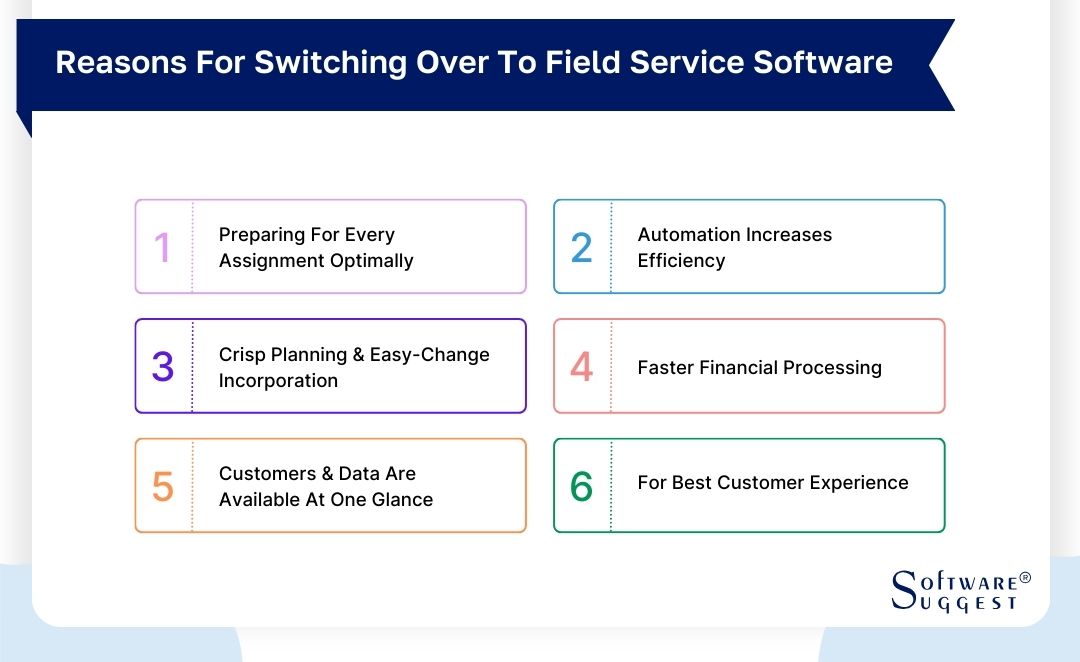
Let us take a look at some of the salient points of why it is a good thing to switch over to mobile field service software.
-
Preparing for every assignment optimally
Tasks in businesses are broken down into logical modules. Nowadays, it has become essential to do work allocation. Though most online field service management system might help you with this, there is a slim chance of being better prepared for the task at hand. Information regarding the place to visit, the problems there, and the equipment required to fix the problem – all these are essential factors for solving any issue.
Technicians / Agents will be able to access the information in their mobile field service software. All the information at hand gets transferred to the field service management software. And this can be accessed by the field agents when they reach the service spot.
-
Automation increases efficiency
Most of the mobile field service management software has the inept ability to plan and incorporate efficient workflows. It means that the entire work order generation module comes alive via automation. Automation has its benefits. There are very few chances of human-made error.
Workflow automation keeps every stage of work in a step-by-step process. As soon as the field agent updates the system via his cloud-based platform regarding the work, the next step is triggered automatically.
-
Crisp planning and easy-change incorporation
Does your business include a lot of runtime planning? Does work come unannounced, but you cannot avoid addressing the issue at hand? Luckily, agility is one of the essential features to look forward to when you are going for mobile field service software. One of the common issues that businesses face is their software module’s lack of adaptability to continually changing business requests or an abundant workload.
Mobile field service software can easily include all changes occurring on the go. These changes could be scheduled reworking, agent unavailability, or change due to lack of spare parts – all these are unforeseen issues, but the system incorporates them. Planning and scheduling become more comfortable, with less hassle and more analysis.
-
Faster financial processing
Financial processing is essential when it comes to all business software in the market. For businesses where field agents are active most of the time, invoicing and billing have to be quick and worry-free. As soon as you complete the work and customer approval is received, immediately the invoice can be generated and mailed to the customer.
-
Customers and Data are available at one glance
For field agents, having a mobile version of the service business management software makes life simpler. They can quickly get rid of paperwork that is expected of them to carry. Since work methods have continuously changed over the years, more and more one-on-one customer service-oriented businesses have come up. It has also increased the amount of overhead of information that companies have to maintain in their database.
-
For the best customer experience
Customer demands are never-ending. If the business couples tightly with customer experiences and feedback, you can get direct information from them on the system. The agents speak with customers and update the feedback module or look for better alternatives.
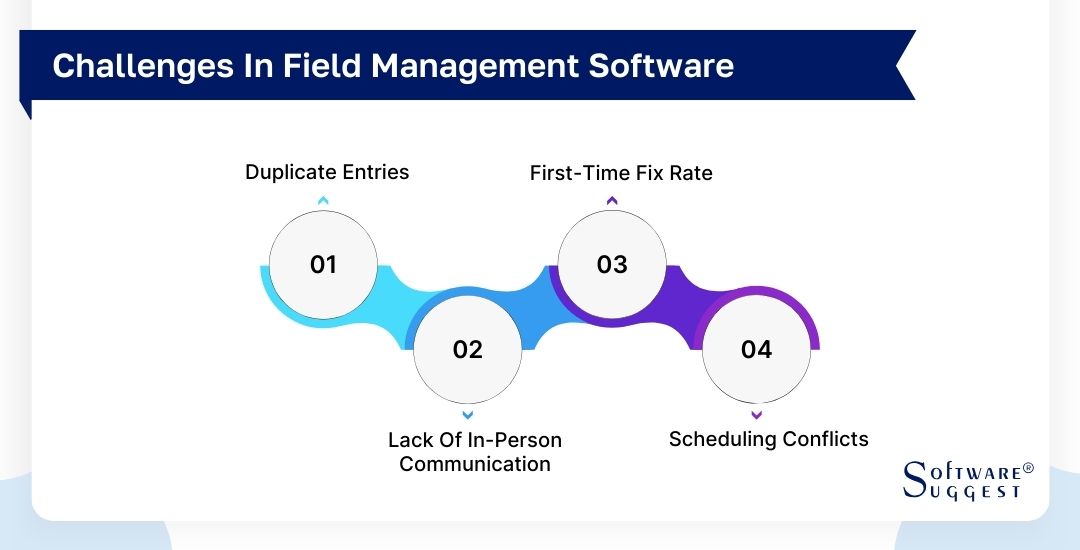
While field workforce management software brings numerous benefits, organizations often face challenges in its implementation and utilization. Recognizing and addressing these field service management challenges is essential to maximize the efficiency of field operations. Let's see in detail:
-
Duplicate entries
The presence of duplicate entries in FSM software is a frequent problem. Confusion, scheduling mistakes, and ineffective resource allocation may result from this. Establishments must create defined procedures for data entry and undertake training programs for staff members utilizing the service business management software. Furthermore, the field service scheduling software ought to incorporate capabilities or connectors that reduce the possibility of duplicate entries.
-
Lack of in-person communication
In field operations, technician independence may hinder in-person communication. To enhance job management and boost customer satisfaction, organizations should leverage service business management software features like real-time messaging and mobile connectivity.
Regular virtual meetings foster teamwork and address communication gaps. Additionally, integrating payment processing streamlines operations and contributes to overall efficiency.
-
First-time fix rate
In field service, reaching a high first-time fix rate is a crucial performance metric. Challenges such as incomplete information, unavailability of required parts, or insufficient training can hinder technicians from resolving issues on the first visit.
Organizations should spend money on thorough training programs if they want to increase the first-time repair rate. Thus, ensure that technicians have access to updated information through the FSM software and maintain well-stocked inventories of commonly used parts.
-
Scheduling conflicts
Efficient scheduling is crucial in field service to optimize resource allocation and meet customer expectations. Scheduling conflicts, whether due to miscommunication or unforeseen circumstances, can disrupt service delivery. FSM software with advanced scheduling algorithms and real-time updates can help mitigate scheduling conflicts.
Best Field Management Software (FMS) is a linchpin for organizations with field operations, streamlining processes and enhancing overall efficiency. Within the realm of FMS, various specialized software applications play crucial roles. Thus addressing specific needs and contributing to seamless operations.
-
Dispatch management software
Efficient dispatch management is fundamental in field operations. Dispatch management software optimizes the allocation of resources. Thus ensuring timely response to service requests. Features such as real-time tracking and dynamic scheduling enhance workflow, enabling organizations to meet customer expectations and improve overall job management.
-
Work order management software
Work order management software is instrumental in organizing and prioritizing tasks in the field. It makes work order creation, assignment, and tracking easier. Thus ensuring that field personnel have clear instructions. This not only enhances job management but also contributes to the timely completion of tasks, boosting overall operational efficiency.
-
CRM software
Customer relationship management (CRM) software is essential for businesses that prioritize client happiness. In the field service context, CRM software helps manage customer interactions, track service history, and anticipate customer needs. By centralizing customer data, organizations can personalize services, address issues promptly, and foster long-term relationships.
-
Asset tracking software
Assets, ranging from equipment to vehicles, are vital in field operations. Asset tracking software enables organizations to monitor and manage their assets efficiently. Real-time tracking, maintenance scheduling, and performance analytics contribute to optimized asset utilization. Thus reducing downtime and enhancing the overall effectiveness of field operations.
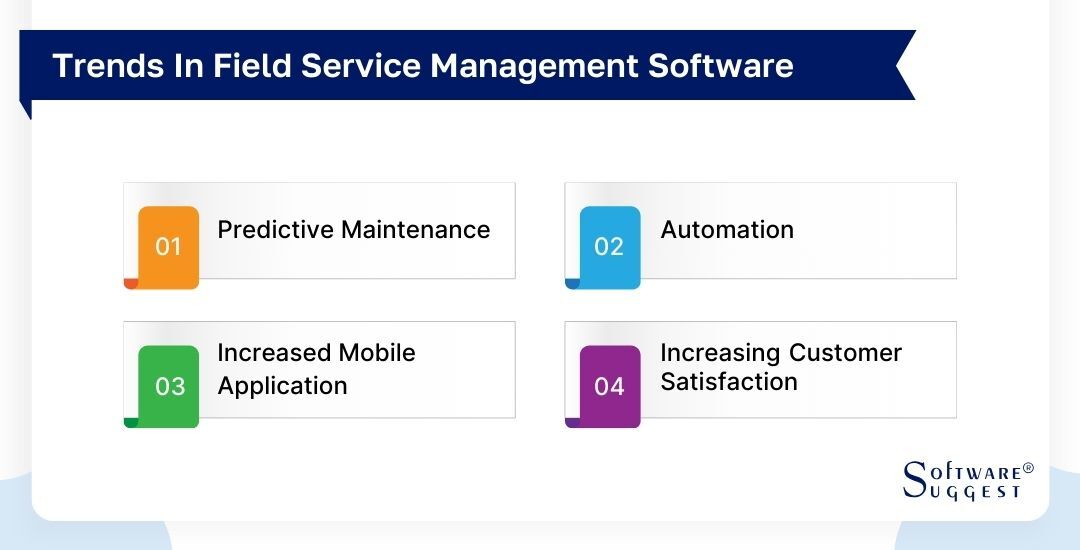
The ever-changing demands of field-based companies and technology breakthroughs are what drive the constant evolution of the field service management software landscape. Understanding the top field service management software trends is crucial for organizations seeking to stay ahead in optimizing their field service operations. Let's see in detail:
-
Predictive maintenance
A game-changing development in FSM is predictive maintenance, which uses machine learning and data analytics to anticipate equipment faults before they happen. By analyzing historical data and performance metrics, organizations can schedule preventive maintenance.
Thus reducing downtime and extending the lifespan of assets. This trend not only enhances operational efficiency but also contributes to cost savings and customer satisfaction by minimizing service disruptions.
-
Automation
A prevalent trend in FSMS is automation, which streamlines numerous operations and lowers the need for manual intervention. Automated workflows, from work order generation to dispatch and invoicing, enhance efficiency and accuracy.
This increases overall job management effectiveness by reducing errors and saving time. Meeting client expectations requires quick reaction times, which automation helps to achieve in spades.
-
Increased mobile application
The proliferation of mobile applications is reshaping field service management platforms. Field workers may now access work orders, customer information, and vital knowledge in real-time thanks to mobile applications.
This increased mobility enhances communication, accelerates decision-making, and improves overall job management. Mobile applications also contribute to a more agile and responsive field service workforce.
-
Increasing customer satisfaction
At the core of FSMS trends is an unwavering focus on increasing customer satisfaction. Features like appointment scheduling, real-time updates, and client feedback mechanisms are all part of modern field service management software.
By providing a transparent and responsive service experience, organizations not only meet but exceed customer expectations. Enhanced customer satisfaction not only contributes to brand loyalty but also serves as a key differentiator in a competitive market.
Conclusion
In conclusion, navigating the intricate landscape of field service management demands a software solution attuned to industry nuances. Choose wisely to streamline workflows, efficient resource management, and a robust answer to field service management pain points. Boost your operations by using field service management software that adapts easily to the changing needs of the field service sector. Thus, anytime you purchase this field service management app, our guide will always be the best reference for you.
Related Researched Articles: