


Best Logistics Software for Your Business
Best logistics software used in the market are Loginext Mile, OptimoRoute, Ramco Logistics, Track-POD, and TruckLinks. Logistics management software solutions take care of the entire logistics channel and ensure no bottleneck in the smooth transport of goods.



No Cost Personal Advisor
List of 20 Best Logistics Software

#1 Cloud ERP for Fast-Growing Businesses
NetSuite, #1 cloud ERP, is an all-in-one cloud business management solution that helps more than 29,000 organizations operate more effectively by automating core processes and providing real-time visibility into operational and financial performance. Read Oracle NetSuite ERP Reviews
Explore various Oracle NetSuite ERP features, compare the pricing plans, and unlock the potential of seamless operations by selecting the right software for your business.
- Budgeting & Forecasting
- Outstanding
- Expense Tracking
- Fundraising Management
- Supplier and Purchase Order Management
- Audit Trail
- Invoicing
- Warehouse Management
Oracle NetSuite ERP Caters to
- StartUps
- SMBs
- Agencies
- Enterprises

Software by Onfleet
Onfleet is a fully featured Fleet Management Software designed to serve SMEs, Startups. Onfleet provides end-to-end solutions designed for Web App. This online Fleet Management system offers Signature Capture, Order Management, Dispatch Management, Computer Aided Dispatch, Performance Metrics at one place. Read Onfleet Reviews
Explore various Onfleet features, compare the pricing plans, and unlock the potential of seamless operations by selecting the right software for your business.
Features
View all Onfleet Features- Scheduling
- Dispatch Management
- Customer Management
- Order Management
- Surveys & Feedback
- Vehicle Tracking
- Performance Metrics
- GPS tracking
Onfleet Caters to
- StartUps
- SMBs
- Agencies
- Enterprises
Category Champions | 2024

Transportation Management Simplified
SuperProcure is a SaaS TMS platform for automating end-to-end logistics from vehicle sourcing to freight accounting leading to improved efficiency, optimized costs, seamless collaboration, greater transparency and customer service. Read SuperProcure Reviews
Explore various SuperProcure features, compare the pricing plans, and unlock the potential of seamless operations by selecting the right software for your business.
Features
View all SuperProcure Features- Land Freight
- LTL / Shared Truckload
- Trip Logs
- Freight Management
- Reporting/Analytics
- Automated Truck Sourcing
- Digital Freight Negotiation
- Shipment Tracking
SuperProcure Caters to
- StartUps
- SMBs
- Agencies
- Enterprises
Emergents | 2024

Complete suite of SCM and Manufacturing
Enterprises can respond swiftly to changing demand, supply and market conditions with Oracle Fusion Cloud SCM. Transform your business operations by optimizing order, supply and fulfillment in a single view. Learn more about Oracle Fusion Cloud SCM
Explore various Oracle Fusion Cloud SCM features, compare the pricing plans, and unlock the potential of seamless operations by selecting the right software for your business.
- Maintenance Management
- Order Entry
- Purchase Order
- Materials Management
- Logistics Management
- Process Manufacturing
- Order Tracking
- Bill of Materials Management
Oracle Fusion Cloud SCM Caters to
- StartUps
- SMBs
- Agencies
- Enterprises
Category Champions | 2024

#1 Cloud ERP for Fast-Growing Businesses
NetSuite, #1 cloud ERP, is an all-in-one cloud business management solution that helps more than 29,000 organizations operate more effectively by automating core processes and providing real-time visibility into operational and financial performance. Read Oracle NetSuite ERP Reviews
Explore various Oracle NetSuite ERP features, compare the pricing plans, and unlock the potential of seamless operations by selecting the right software for your business.
- Marketing Management
- POS Integration
- General Ledger
- Social Sharing
- 3rd Party Integrations
- Vendor Performance Rating
- Content Import/Export
- Data Management
Oracle NetSuite ERP Caters to
- StartUps
- SMBs
- Agencies
- Enterprises
Emergents | 2024

Achieving perfect order fulfillment at the lowest
When speed and accuracy are critical to customer satisfaction, businesses rely on their warehouses to keep the supply chain moving. Infor WMS combines warehouse fulfillment with embedded labor management and 3D visual analysis to give unprecedented visibility into inventory, orders, equipment, and people. Learn more about Infor WMS
Explore various Infor WMS features, compare the pricing plans, and unlock the potential of seamless operations by selecting the right software for your business.
Features
View all Infor WMS Features- Order Fulfillment
- Mobile Access
- Workflow Management
- Lot Tracking
- Job Management
- Barcode Generation
- Customer Management
- Ad hoc Analysis
Infor WMS Caters to
- StartUps
- SMBs
- Agencies
- Enterprises
Emergents | 2024

Logistics Software By Dataman Computer Systems
Dataman ERP Software is an ERP Solution to address the needs of Transport, Fleet Owners and Logistic Services Providers. It helps Software for Transport you to track goods, from Booking Shipment to Customer Door Delivery. A total solution for Logistics, Transporter covers all aspects of Transport Business on Cloud Technology. Learn more about Dataman ERP
Explore various Dataman ERP features, compare the pricing plans, and unlock the potential of seamless operations by selecting the right software for your business.
Dataman ERP Caters to
- StartUps
- SMBs
- Agencies
- Enterprises
Category Champions | 2024

SAP Business One Implementation & Support
Uneecops SAP Business One is a cost effective, integrated ERP software for SMEs. Made specifically to meet the demands of small and medium businesses, Uneecops helps you manage your business as per set international standards. Covers all key functions like productions, inventory, finance, sales, HR and more. Read Uneecops SAP Business Reviews
Explore various Uneecops SAP Business features, compare the pricing plans, and unlock the potential of seamless operations by selecting the right software for your business.
- Integration capabilities
- Accounts Receivable
- Business process modeling (BPM)
- Invoicing
- Inventory control
- CRM
- Bill of materials (BoM)
- Warehouse Management
Uneecops SAP Business Caters to
- StartUps
- SMBs
- Agencies
- Enterprises
High Performer | 2024

The Smartest Digital Shipping Solution
Zepo Couriers lets you tackle your eCommerce shipping woes with a single dynamic platform. Having partnered with multiple courier providers in India, It provide the best prices, unparalleled reach and lets you schedule a pickup right from your doorstep. Read Zepo Couriers Reviews
Explore various Zepo Couriers features, compare the pricing plans, and unlock the potential of seamless operations by selecting the right software for your business.
Features
View all Zepo Couriers Features- Booking
- Print Packing Slips
- Multi-channel
- Seamless Integration
- Parcel Shipping
- Batch Print Labels
- Manage Multi-item Orders
- Ship in a Snap
Pricing
Basic
$ 7
User/Month
Starter
$ 14
User/Month
Pro
$ 28
User/Month
Zepo Couriers Caters to
- StartUps
- SMBs
- Agencies
- Enterprises
Emergents | 2024

Smart Optimization for Rapid Growtb
eFleetAdmin covers all operational process automation for the fleet owners. eFleetAdmin is a secured web based application that can be accessible from anywhere in the world. Read eFleetAdmin Reviews
Explore various eFleetAdmin features, compare the pricing plans, and unlock the potential of seamless operations by selecting the right software for your business.
Features
View all eFleetAdmin Features- Maintenance Management
- Financial Management
- Customer DataBase
- Purchase Management
- Billing & Invoicing
- Financial Accounting
- Mileage Tracking
- Parts Management
eFleetAdmin Caters to
- StartUps
- SMBs
- Agencies
- Enterprises
Category Champions | 2024

Intelligent Fleet Management Software
Fleetx.io is India's best fleet management and GPS/Vehicle tracking software that digitalizes end to end fleet and logistics operations and provides real-time recommendations and actionable insights to fleet owners and logistics companies using AI/ML. Read fleetx Reviews
Explore various fleetx features, compare the pricing plans, and unlock the potential of seamless operations by selecting the right software for your business.
Features
View all fleetx Features- Employee Management
- Trip Logs
- Invoice Management
- Waybills
- Vendor Management
- Predictive Maintenance
- Vehicle Management
- Fleet Management
fleetx Caters to
- StartUps
- SMBs
- Agencies
- Enterprises
Contenders | 2024
The leading transportation management system (TMS)
It is a software which understands your ERP needs and works accordingly. It helps in managing your freight forwarding business. It has modules for shipment management, online customer management, sales management, and so on. Read Logistaas Reviews
Explore various Logistaas features, compare the pricing plans, and unlock the potential of seamless operations by selecting the right software for your business.
Features
View all Logistaas Features- Reporting/Analytics
- Online Tracking
- Customer Portal
- Online Booking
- Dashboard
- Shipping Management
- Order Tracking
- Inventory Management
Pricing
Freight Management Solution
$ 55
Per Month
Customer Relationship Management
$ 35
Per Month
Logistaas Caters to
- StartUps
- SMBs
- Agencies
- Enterprises
Emergents | 2024

Software by ATIC Data Systems Private Limited
MZone is web enabled application software designed for fleet, transport and logistics companies. The application is a comprehensive management tool that is a completely web-based reporting and mapping system has proven to help streamline fleet operational costs. Read MZone Reviews
Explore various MZone features, compare the pricing plans, and unlock the potential of seamless operations by selecting the right software for your business.
MZone Caters to
- StartUps
- SMBs
- Agencies
- Enterprises
Emergents | 2024

Software by Sagar Solutions Pvt. Ltd.
This software is an integrated accounting, transportation/cargo management and tour & travels business solution. Learn more about Sagar Tour & Travels Software
Explore various Sagar Tour & Travels Software features, compare the pricing plans, and unlock the potential of seamless operations by selecting the right software for your business.
Sagar Tour & Travels Software Caters to
- StartUps
- SMBs
- Agencies
- Enterprises
Emergents | 2024

Software by VERTS Services India Private Limited
VERTS Courier Management Software solution designed for the Courier, Logistics and Warehousing Industry on top of open source platform software that supports reporting, billing and control and provides clear report to management at all levels about how the courier company is performing its assigned job. Learn more about Verts Courier and Logistics Software
Explore various Verts Courier and Logistics Software features, compare the pricing plans, and unlock the potential of seamless operations by selecting the right software for your business.
Verts Courier and Logistics Software Caters to
- StartUps
- SMBs
- Agencies
- Enterprises
Emergents | 2024

One Stop Automation Solution For Deskless Workforc
All-in-one automation solution for deskless workforces. Set up workflows, and automate your entire organization in less than 2 minutes with Fieldproxy. Schedule a completely free demo today Learn more about Fieldproxy
Explore various Fieldproxy features, compare the pricing plans, and unlock the potential of seamless operations by selecting the right software for your business.
Features
View all Fieldproxy Features- Catalog Management
- Preventive Maintenance Scheduling
- multi-location capable
- Asset Lifecycle Management
- For Healthcare
- Predictive Maintenance
- Geo Targeting
- Drag & Drop
Pricing
Starter
$ 10
Per Month
Fieldproxy Caters to
- StartUps
- SMBs
- Agencies
- Enterprises
Contenders | 2024

Software by Softlink Global Private Limited.
Logi-Sys is a Next Generation Cloud ERP solution, for Freight Forwarding and Logistics Industry that helps to automate, streamline and integrate the logistics processes to enhance operational efficiency, improve customer services and increase profitability. Read Logi-Sys Reviews
Explore various Logi-Sys features, compare the pricing plans, and unlock the potential of seamless operations by selecting the right software for your business.
Features
View all Logi-Sys Features- Air Freight
- Container Freight Station
- Inventory Management
- Sales & Services
- Transportation Management
- Container Shipping
- Warehouse Management
- CRM
Logi-Sys Caters to
- StartUps
- SMBs
- Agencies
- Enterprises
Emergents | 2024

An integrated, web-based ocean logistics product
Ocean Bird is a web based, end-to-end, modular, scalable and enterprise-wide 'Logistics Software' for effectively managing the business of international Freight Forwarders. It offers automated management of sea and air freight forwarding operations with ease and speed. Learn more about Ocean Bird
Explore various Ocean Bird features, compare the pricing plans, and unlock the potential of seamless operations by selecting the right software for your business.
Ocean Bird Caters to
- StartUps
- SMBs
- Agencies
- Enterprises
Contenders | 2024
Software by MAK Tree solutions Pvt. Ltd
MAK Tree uses industry leading web technologies and cutting-edge hardware design to bring you the highest quality of GPS Vehicle Tracking and Fleet Management Solutions. Read MAKTree Reviews
Explore various MAKTree features, compare the pricing plans, and unlock the potential of seamless operations by selecting the right software for your business.
Features
View all MAKTree Features- For Drivers
- Fuel Management
- GPS tracking
- For Freight
- Fleet Management
MAKTree Caters to
- StartUps
- SMBs
- Agencies
- Enterprises
Contenders | 2024

A Software to Manage Courier & Logistics Operation
Courier management System is a software solution developed by Sagar Informatics Pvt. Ltd.,which has the features of printing of bills invoice, client management, employee management, initial settings, queries, reporting, franchise for delivery, updating delivery status for the packets. Read Sagar Courier Management Reviews
Explore various Sagar Courier Management features, compare the pricing plans, and unlock the potential of seamless operations by selecting the right software for your business.
- Vehicle Tracking
- Catalog Management
- Order Tracking
- Dispatch Management
- Client Management
- Access Controls/Permissions
- Vendor Management
- Reporting/Analytics
Sagar Courier Management Caters to
- StartUps
- SMBs
- Agencies
- Enterprises
Get Free Expert Advice

Recent Review

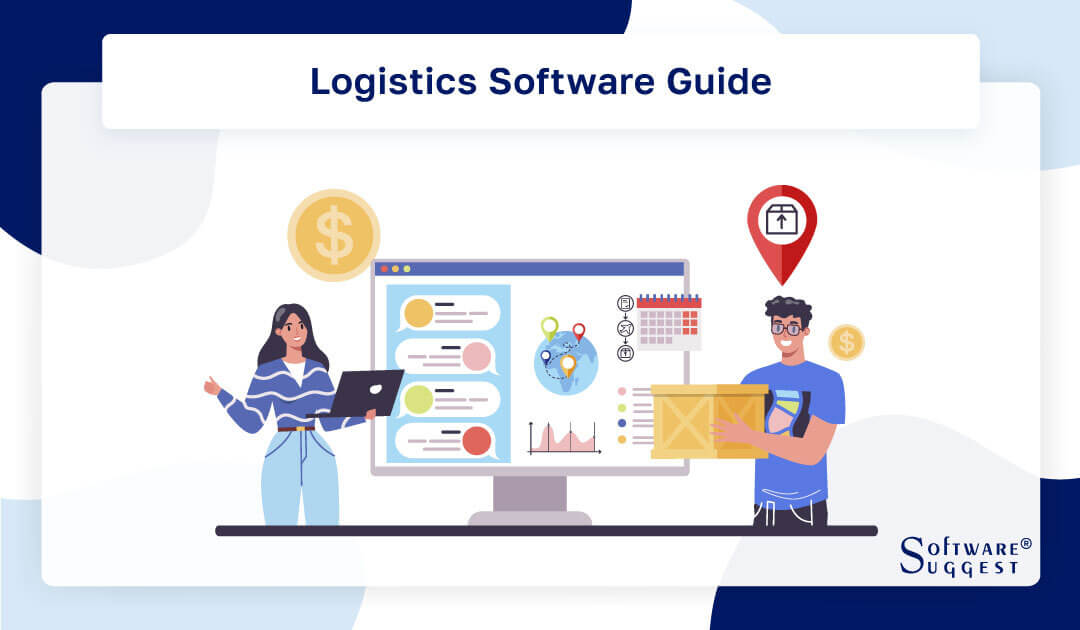
Logistics software is highly advanced and intuitive as it takes care of many elements behind the scenes, such as optimizing routes for delivery trucks, keeping track of inventory levels, coordinating shipments, and even handling all the nitty-gritty details like customs paperwork for international shipping.
Without logistics software, businesses would be drowning in chaos, trying to manage all the moving parts of their supply chain. But with this smart tool in their arsenal, they can wave goodbye to headaches and focus on what they do best.
What is Logistics Software?
Logistics software is a computer program that allows you to integrate transportation, material handling, packaging, inventory, and security associated with the supply chain process. The software also helps you manage and schedule the mailing, shipping, and tracking packages, equipment, and letters. Some advanced logistics solutions also automate the process of shipping and tracking processing.
What Does Logistics Software Do?
Logistics software is a specialized computer application designed to optimize and streamline various aspects of supply chain management and transportation operations. It plays a crucial role in enhancing efficiency, reducing costs, and improving overall performance for businesses involved in the movement of goods and services.
Types of Logistics Management Software
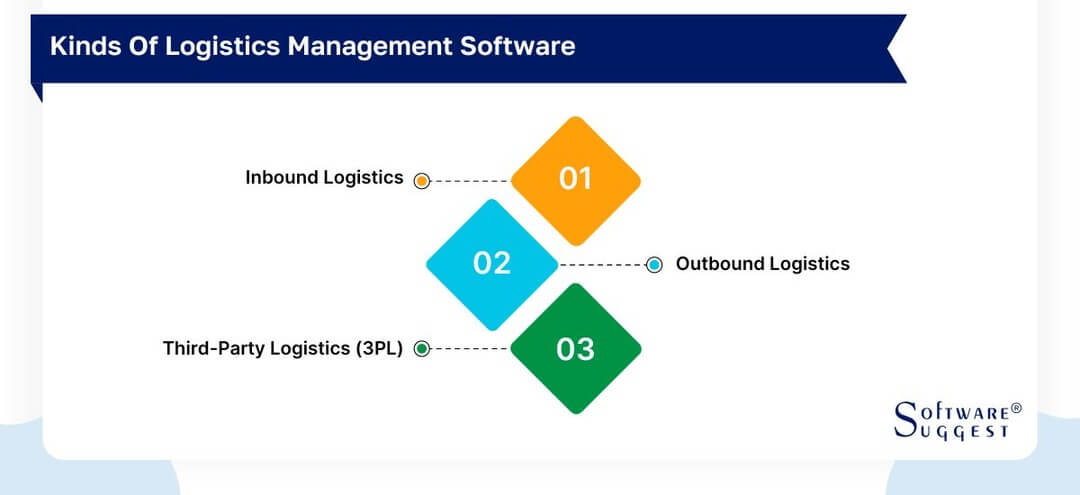
Logistics management software comes in various types, each catering to specific aspects of supply chain operations. Some common types include:
-
Inbound Logistics
Inbound logistics management software focuses on the efficient handling of raw materials, components, and goods as they flow into a company's operations. This type of software streamlines processes such as supplier management, purchase orders, inventory tracking, and receiving.
It helps businesses optimize their supply chain by ensuring timely deliveries, reducing stockouts, and managing relationships with suppliers effectively.
With inbound logistics software, companies can better plan and coordinate their procurement activities, ensuring a smooth flow of materials to support production and other internal operations.
-
Outbound Logistics
Outbound logistics management software focuses on orchestrating the transportation of finalized goods from the company's premises to the ultimate consumers. It encompasses functions like order processing, warehouse management, transportation planning, and delivery tracking.
By using outbound logistics software, businesses can improve order fulfillment accuracy, reduce lead times, and optimize their distribution network.
This type of software also facilitates better customer service or customer satisfaction by providing real-time shipment updates and enabling companies to respond swiftly to customer inquiries.
-
Third-Party Logistics (3PL)
Third-Party Logistics, often abbreviated as 3PL, involves the delegation of logistics tasks to external service providers. 3PL logistics management software helps both companies and third-party providers collaborate efficiently.
It allows businesses to monitor and coordinate their supply chain activities outsourced to 3PL providers, ensuring seamless integration and data sharing. This software typically includes features like performance tracking, cost analysis, and reporting capabilities to help companies assess the effectiveness of their 3PL partnerships.
By using 3PL warehouse software, companies can leverage the expertise and resources of specialized logistics providers, leading to cost savings, increased flexibility, and a more scalable supply chain.
Benefits of Best Logistics Software
Logistics management software, also known as transport logistics software or shipping logistics software, can offer significant advantages to businesses in the supply chain and transportation industry. When choosing the best logistics software from reputable logistics software companies, businesses can expect the following benefits -
-
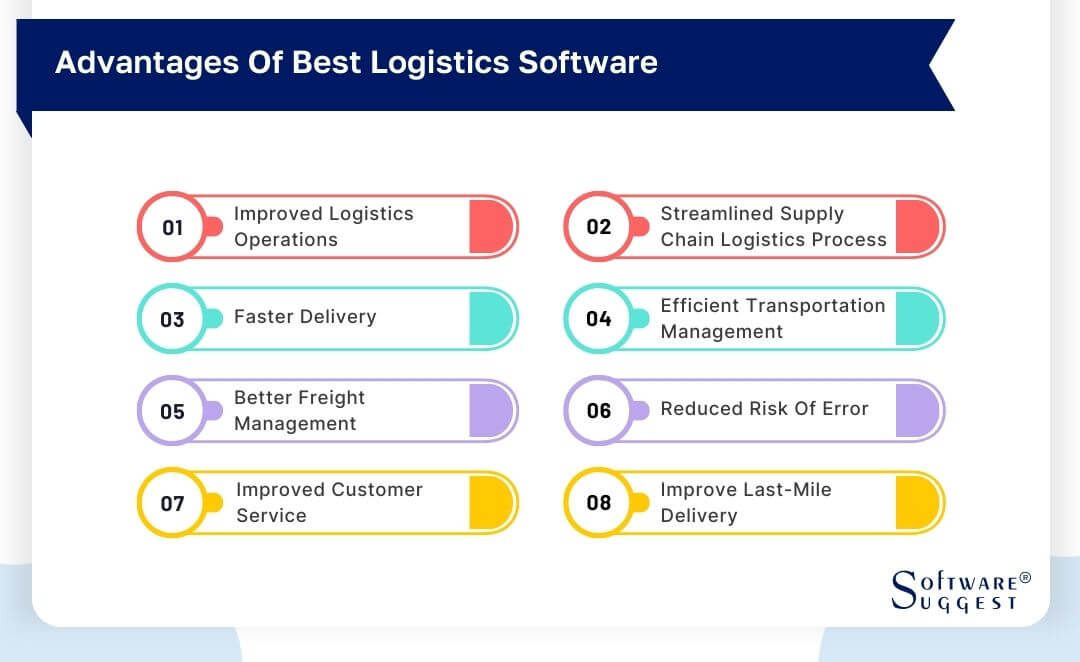
Improved Logistics Operations
By utilizing logistics software solutions, businesses can optimize their supply chain processes. Automated route optimization & planning, inventory management, and order processing help reduce manual errors and save valuable time, leading to smoother and more efficient logistics operations.
-
Streamlined Supply Chain Logistics Process
Logistics software plays a pivotal role in enhancing coordination and communication across the entire supply chain. This helps establish seamless connections between suppliers, manufacturers, distributors, and retailers, leading to a well-coordinated flow of goods from the point of origin to the end customer. As a result, delays, bottlenecks, and disruptions are minimized, contributing to an optimized and efficient supply chain.
-
Faster Delivery
The best logistics software enables businesses to identify the most efficient delivery routes, taking into account factors like traffic, weather, and delivery time windows. By optimizing transportation, the software reduces transit times, expedites the delivery process, and ensures faster fulfillment of customer orders. Fulfilling customer demands for swift delivery results in elevated customer satisfaction levels and enhanced customer loyalty.
-
Efficient Transportation Management
Transport logistics software assists in effective fleet management, enabling businesses to track vehicle performance, schedule maintenance, and monitor fuel consumption. By optimizing transportation routes and load capacities, the software helps reduce fuel costs and carbon emissions, promoting environmentally sustainable practices.
-
Better Freight Management
The best logistics solutions help you improve the freight management process. Manual freight management can be tedious and time-consuming. Logistics software automates recurring freight management tasks, like vehicle maintenance and gathering quotes. Thus, you can save time and resources you’d have otherwise spent on manual freight management activities.
-
Reduced Risk of Error
Common errors in logistics and supply chain management are:
- Not preparing for the change
- Poor cost management
- Poor cybersecurity
- Choosing too many or fewer vendors
- Failure to utilize data
- Bad customer experience
- Not cultivating good supplier relationships
- Not sharing crucial information
-
Improved Customer Service
Logistics tracking software allows businesses to provide accurate and real-time information about order status and shipment tracking to customers. Customers can stay informed about their orders, receive timely updates, and have their inquiries addressed promptly. Providing on-time and error-free deliveries builds trust and fosters long-term relationships with customers.
-
Improve Last-Mile Delivery
Last-mile delivery, a critical aspect of the supply chain, can significantly impact the customer experience. The best logistics software employs advanced route optimization algorithms to ensure efficient last-mile delivery. This helps drivers navigate through congested urban areas, identify optimal delivery sequences, and reduce delivery times, resulting in successful, on-time deliveries, even in dense urban environments.
Key Features of Logistics Management Software
Logistics management software, offered by various organizations specializing in logistics solutions, comprehends a diverse range of features that enhance the efficiency and effectiveness of supply chain operations. Below, you will find some of the common features present in logistics software solutions -
-
Inventory & Logistics Management
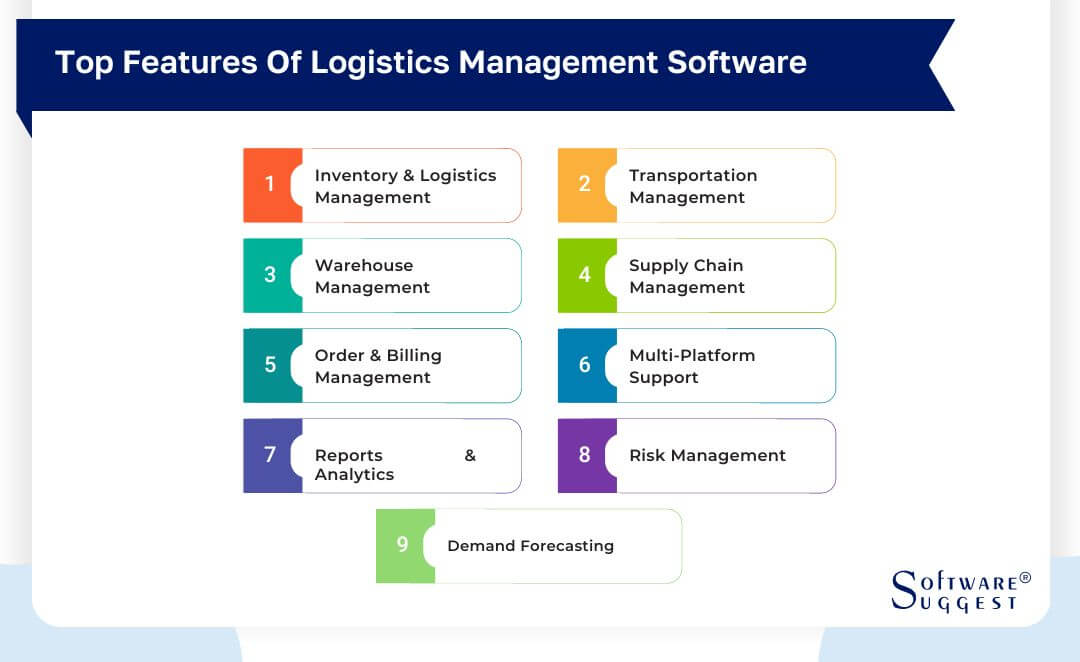
An essential aspect of logistics management software is its capability to handle inventory and logistics operations. By doing so, it empowers businesses to track and manage inventory levels in real-time, ensuring the maintenance of optimal stock levels. This software facilitates streamlined order processing, efficient inventory tracking, and effective management of incoming and outgoing goods.
-
Transportation Management
Transportation management plays a critical role in logistics, and the software excels in optimizing this process. It assists in planning and executing the most cost-effective and efficient transportation routes. The transportation management feature also encompasses load optimization, carrier selection, and real-time tracking of shipments, allowing businesses to streamline their transportation activities.
-
Warehouse Management
Logistics software solutions offer comprehensive warehouse management capabilities. This feature aids businesses in organizing their warehouses, managing storage space, and tracking inventory movement within the facility. Warehouse management features also include order picking, packing, and shipping to ensure smooth and accurate order fulfillment.
-
Supply Chain Management
At the core of logistics management software lies supply chain management functionality. This feature enables businesses to oversee and coordinate the entire supply chain, from sourcing raw materials to delivering finished products. It fosters seamless communication and collaboration among suppliers, manufacturers, distributors, and retailers, optimizing the flow of goods and information.
-
Order and Billing Management
Order and billing management is crucial to logistics and supply chain management. Most logistic programs allow you to create bills and orders for your customers and partners. This helps you automate a substantial share of your order management process and eliminates the need for complex paperwork and manual, repetitive tasks.
Order and billing capabilities also help you meet unique needs. With customer requirements continuously changing, having flexible order management features allows you to be agile and fulfill the needs of diverse customers.
-
Multi-Platform Support
Lastly, all modern-day logistics management systems include support for multiple platforms. With remote work becoming the new normal, organizations should look for solutions that work on mobile devices, tablets, and laptops. Considering these requirements, most logistics software vendors now support multiple platforms and operating systems.
-
Reports and Analytics
Ensure that the logistics management software you invest in has comprehensive supply chain analytics capabilities. Analytics tools powered by Business Intelligence (BI) enable you to understand the supply chain and logistics process in-depth. You can identify and resolve problems and disruptions.
Access to in-depth data also assists you in updating existing strategies and formulating new ones. The more data you have, the better understanding you get of your business. Knowing your business well lets you make informed decisions that help you become more efficient and profitable.
-
Risk Management
Logistics software incorporates robust risk management features to help businesses identify potential disruptions and vulnerabilities in the supply chain. This includes analyzing various risk factors, such as delays, natural disasters, or supplier issues. By proactively identifying risks, companies can develop contingency plans to mitigate potential disruptions.
-
Demand Forecasting
Precise prediction of demand is crucial for effective inventory management and strategic resource planning. Logistics software incorporates demand forecasting functionalities, utilizing historical data and market trends to anticipate future demand. This assures that businesses can maintain optimal inventory levels, avoid stockouts, and meet customer demands effectively.
Things to Consider While Buying Logistics Software
A logistics software solution can add substantial value to your business. But to avail of those benefits, you must choose the right software.
Here are a few things to consider when selecting a logistic program.
-
Easy of Use
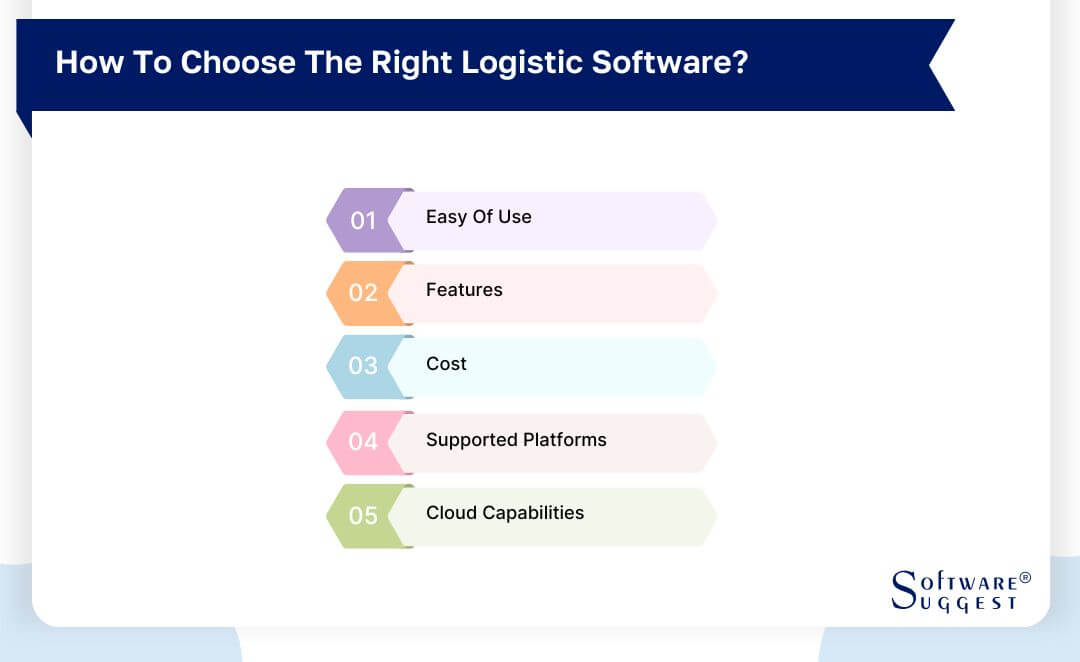
Implementing a logistics management system aims to make life easier for you and your team. If the software is complex and difficult to use, your team will have to spend a lot of time getting used to it, which will nullify its benefits. Therefore, be sure to find a solution that’s easy to use so all team members can learn to use it quickly.
-
Features
Selecting the right features is essential when investing in a logistics system. Please note that the best logistics solutions come with various features, but you may not need all of them. Besides, the more features you request, the more the cost will rise. Understand your requirements properly and opt for only the features that you need.
-
Pricing
Pricing is another crucial aspect to consider. The end goal of deploying a logistics management system is to reduce costs and increase profitability. But if the solution is too expensive, it’ll increase your overhead expenses and negate your profits. While you shouldn’t go for the cheapest options, stay within your budget.
-
Supported Platforms
The choice of platforms will depend on your requirements. If you’re a business that uses Windows-powered computers and laptops only, don’t increase the cost by opting for multiple platforms. But if you have a remote team, support for various platforms like Windows, Mac, Linux, Android, and iOS is necessary.
-
Cloud Capabilities
If you have a remote workforce, choosing a solution with cloud capabilities is essential. A cloud-enabled system can be accessed anywhere, anytime, and from any device. As a result, you can allow your team to work regardless of where they are.
Top 5 Logistics Software Comparison
|
Name
|
Free Trial
|
Demo
|
Pricing
|
|---|---|---|---|
|
14 Days |
Yes |
$550/month | |
|
14 Days |
Yes |
Custom Pricing |
|
|
7 Days |
Yes |
Custom Pricing |
|
|
30 Days |
Yes |
$300/user//month |
|
|
14 Days |
Yes |
$49/month |
Here is the carefully curated list of the top five logistics software solutions that offer cutting-edge features, deliver impressive advantages, address potential drawbacks, and come with transparent pricing options to meet your business needs.
1. Descartes
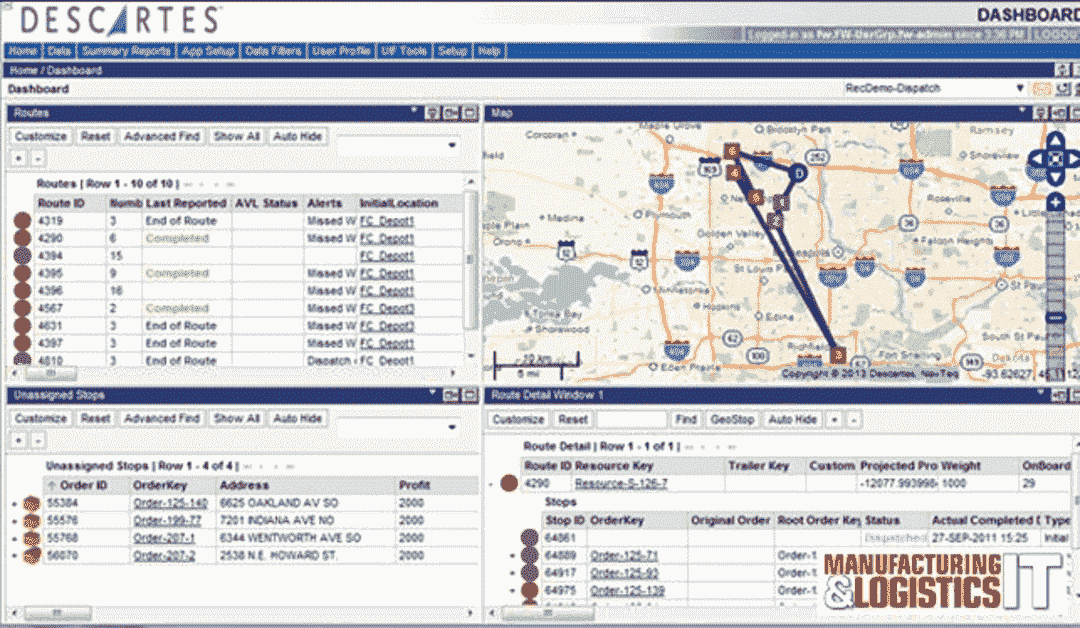
Descartes is a comprehensive logistics management software that offers a wide range of features, including transportation management, route optimization, warehouse management, and customs compliance. It also provides real-time tracking and visibility across the supply chain.
Descartes Features
- Route planning and scheduling
- Mobile logistics monitoring
- Telematics integration
- Transportation management
- SmartCompliance™ Road Transport Compliance
Descartes Pros
- Hassle-free and user-friendly mobile application
- Accurate truck location displayed on a map view
- Ability to identify potential delays at stops
- Intelligent features, but occasional challenges in certain regions
- Integration with other apps, allowing seamless sharing of information when installed on the same device
Descartes Cons
- Dashboard design may benefit from a refresh to align with current trends, presenting a cleaner and more modern appearance.
- Pricing can be higher compared to other logistic programs.
Descartes Pricing
- Descartes Aljex offers two pricing tiers: one at $550/month and another at $1050/month, which includes extra features to enhance your experience.
2. Cargowise
Cargowise is a leading logistics software solution with a focus on freight forwarding and supply chain execution. It includes features for end-to-end shipment management, document processing, and real-time tracking.
Cargowise Features
- 3PL management
- Accounting functionality
- Accounting integration
- Automated Scheduling
- Air shipping capabilities
Cargowise Pros
- Cargowise is highly configurable and scalable, making it suitable for both small businesses and large enterprises.
- It has an extensive global network of partners and integrations, facilitating seamless collaboration.
Cargowise Cons
- The learning curve can be steep for new users due to its comprehensive functionality.
- During peak times, a few users have reported sporadic performance problems.
Cargowise Pricing
- Cargowise offers customized pricing based on the company's size and requirements.
3. Magaya
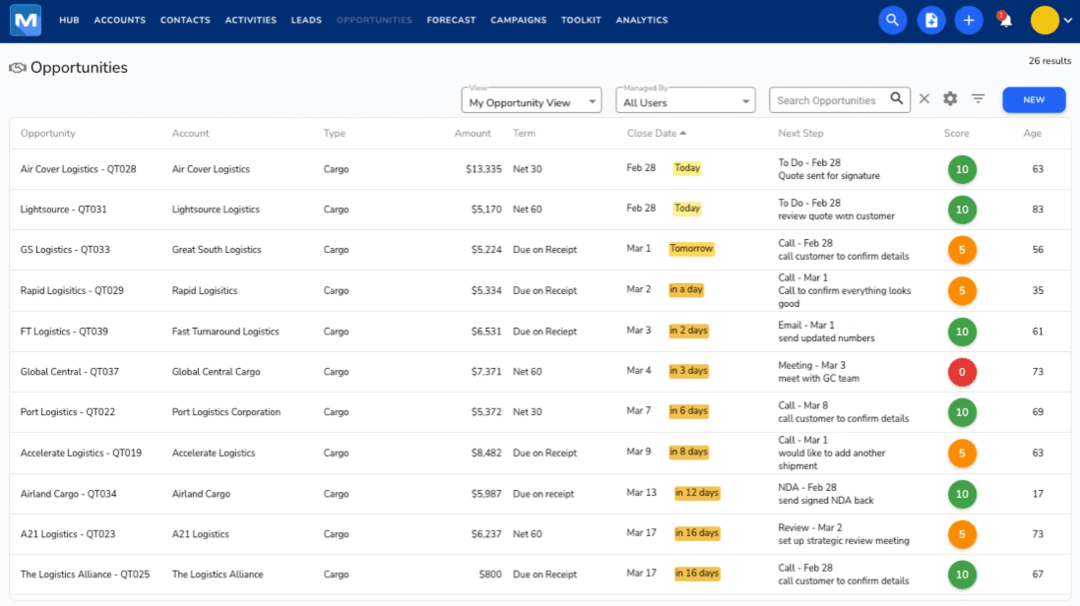
Magaya is a logistic program that caters to freight forwarders, warehouse operators, and e-commerce businesses. It provides features for shipment management, warehouse operations, accounting, and document management.
Magaya Features
- Inventory Management
- Warehouse Management
- API integration for seamless connectivity
- Accounting and financial integration
- Supplier Management
- Real-time activity dashboard and tracking
- Air shipping capabilities
Magaya Pros
- The note and alert system keeps everyone updated, and the comprehensive reports provide all the necessary details.
- Easy data filtering and quick access to information with a visually friendly interface.
- User-friendly software that is highly reliable and adapts to our specific needs.
- Exceptional company with a great system, and the staff is a pleasure to work with.
Magaya Cons
- Learning the software on your own can be challenging, especially when using the cloud due to scanning issues.
- Some repetitive fields could be more streamlined to avoid duplicating information.
- Support could be improved as there were frustrations with disabling users for a minor payment delay.
Magaya Pricing
- Magaya offers various pricing plans, including subscription-based options and customized plans based on specific needs.
4. Oracle Fusion Cloud SCM
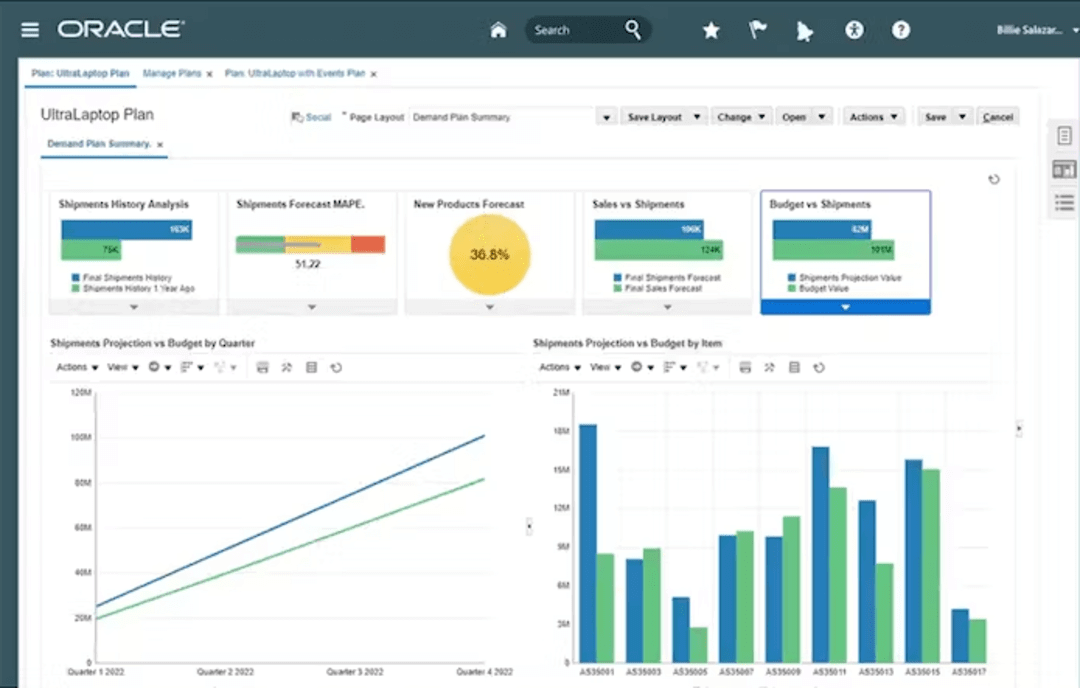
Oracle Fusion Cloud SCM is a comprehensive supply chain management solution that covers logistics, inventory, procurement, and manufacturing. It offers advanced analytics and real-time insights to optimize the supply chain.
Oracle Fusion Cloud SCM Features
- Demand-driven inventory replenishment
- Logistics management
- Supply chain planning
- Order Management
- Efficient manufacturing production scheduling
- Backlog management
Oracle Fusion Cloud SCM Pros
- Being part of the Oracle ecosystem, it seamlessly integrates with other Oracle applications, allowing for end-to-end business management.
- It scales well for large enterprises with complex supply chains.
Oracle Fusion Cloud SCM Cons
- The initial implementation and customization process can be time-consuming and may require specialized expertise.
- The pricing of Oracle SCM Cloud can be on the higher side for startups and small businesses.
Oracle Fusion Cloud SCM Pricing
- Oracle SCM Cloud is priced at $300 per user/month, making it an accessible and flexible solution for your supply chain management needs.
5. LogiNext
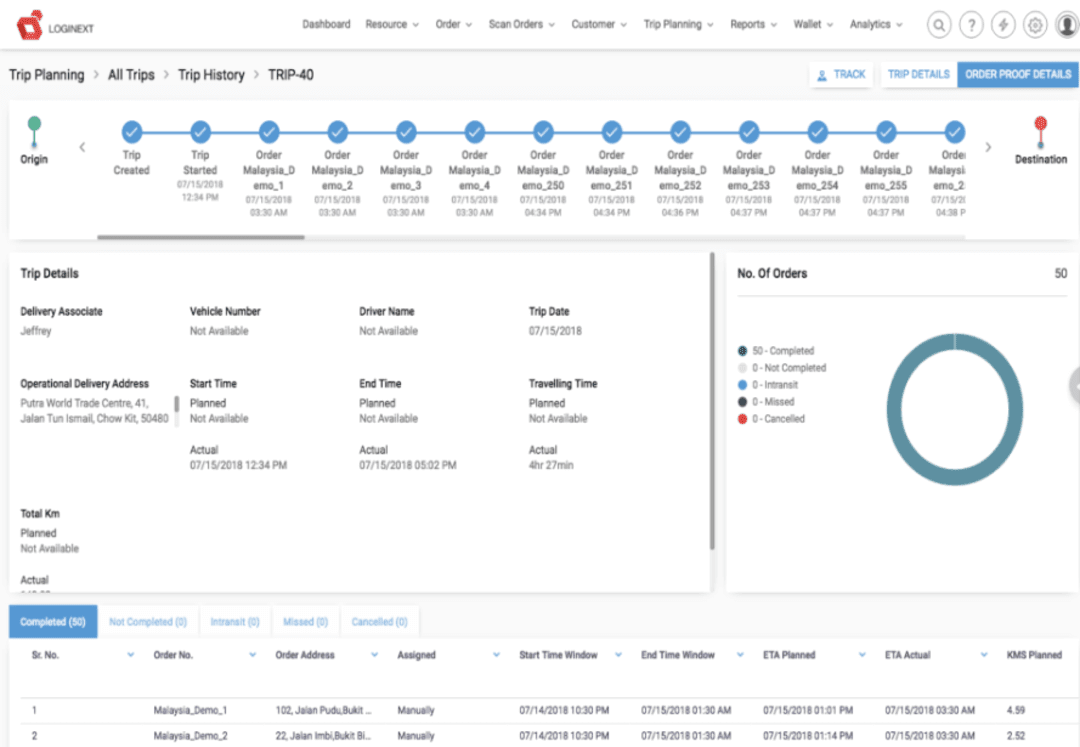
LogiNext is a logistics tracking software that specializes in last-mile delivery optimization. It provides real-time tracking, optimizes routes, and offers delivery analytics.
LogiNext Features
- Route management
- Automated scheduling
- Route optimization
- Driver Behaviour Analysis
- Automates supply chain deliveries
LogiNext Pros
- LogiNext is easy to integrate with existing systems and offers a user-friendly interface.
- Its last-mile delivery optimization capabilities can significantly improve operational efficiency.
LogiNext Cons
- Some users may find the reporting and analytics features less comprehensive compared to other logistics scheduling software.
- It primarily focuses on last-mile delivery and may not cover all aspects of logistics management.
LogiNext Pricing
- LogiNext offers a 14-day free trial with access to all features, and after that, you can choose between the Advanced plan at $49 per month per resource or contact them directly for Enterprise pricing options.
Software & Services Related to Logistics Software
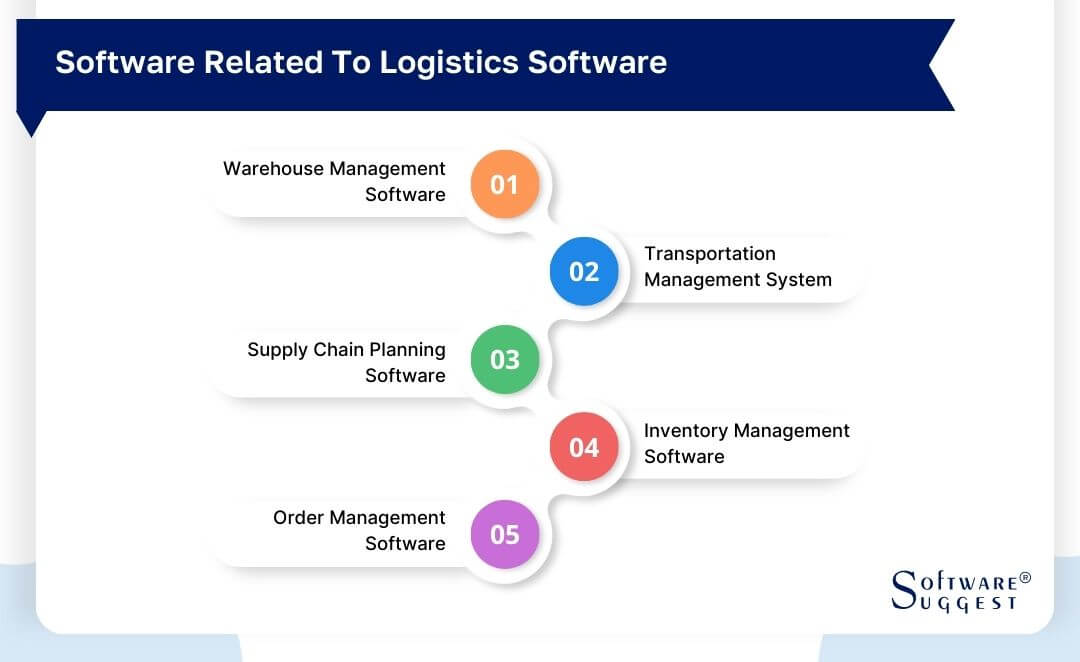
There are various software and services related to logistics management that help streamline operations and enhance efficiency in supply chain management. Some of the key software are:
-
Warehouse Management Software
Warehouse management software complements logistics software by focusing on optimizing and automating warehouse operations. It helps businesses efficiently manage inventory, storage, and order fulfillment within the warehouse. Warehouse management software enhances the accuracy of stock tracking, reduces picking and packing errors, and improves overall warehouse productivity.
-
Transportation Management System (TMS)
Transportation management systems work in synergy with logistics software to streamline transportation activities. TMS helps plan, execute, and track the movement of goods, optimizing routes, and managing carrier selection. It also facilitates freight cost management, real-time tracking, and performance analytics, enabling businesses to achieve cost-effective and efficient transportation.
-
Supply Chain Planning Software
Supply chain planning software is closely related to logistics software solutions, focusing on end-to-end supply chain optimization. It involves demand forecasting, inventory planning, production scheduling, and distribution strategies. By integrating supply chain planning software with logistics software, businesses can create a seamless and synchronized supply chain operation.
-
Inventory Management Software
Inventory management software works hand in hand with logistics software to ensure optimal control and monitoring of stock levels. It tracks inventory in real-time, manages stock replenishment, and automates order processing. Integrating inventory planning software with logistics software enhances inventory accuracy and prevents stockouts or overstock situations.
-
Order Management Software
Order management software complements the logistic program by streamlining the entire order processing cycle. It centralizes and automates order capture, tracking, and fulfillment. By integrating order management software with logistics software, businesses can achieve efficient order processing and improve customer service.
Challenges in Logistics Management Software
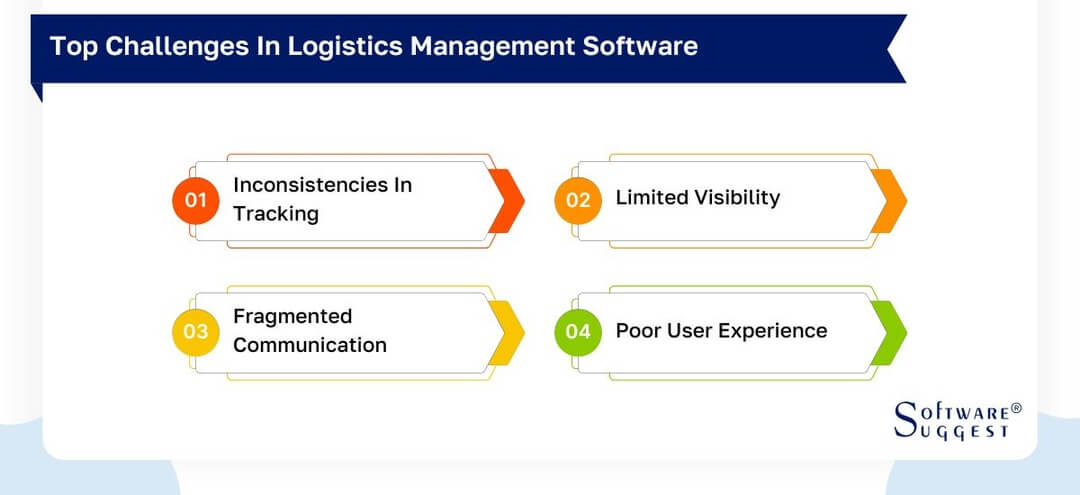
Logistics management software faces several challenges in its implementation and use. Some of the key challenges include -
-
Inconsistencies in tracking
One of the common challenges faced by logistics management software, such as logistics tracking software or shipping logistics software, is the presence of inconsistencies in tracking. Different carriers and transportation modes may use various tracking systems, leading to fragmented data and difficulties in obtaining accurate and real-time shipment information. This inconsistency can hinder the ability to monitor and manage the movement of goods effectively.
-
Limited visibility of shipments
Another challenge related to logistics software solutions is the limited visibility of shipments throughout the supply chain. As products move through different stages and handoffs, the lack of real-time visibility can result in delays, disruptions, and difficulties in addressing potential issues promptly. Limited visibility can lead to suboptimal decision-making and negatively impact customer service.
-
Fragmented communication
Effective communication is crucial in logistics management, involving various stakeholders such as suppliers, carriers, warehouses, and customers. Fragmented communication, whether due to the use of different communication channels or manual data entry in logistic programs, can lead to miscommunications, delays in response, and increased operational inefficiencies.
-
Poor User Experience
Logistics management software, including the best software for logistics and logistics scheduling software, should be intuitive and user-friendly to ensure smooth adoption and usage. A poor user experience, such as complex interfaces or limited functionality, can result in resistance from users, longer training periods, and decreased overall productivity.
Latest Trends in Logistic Software
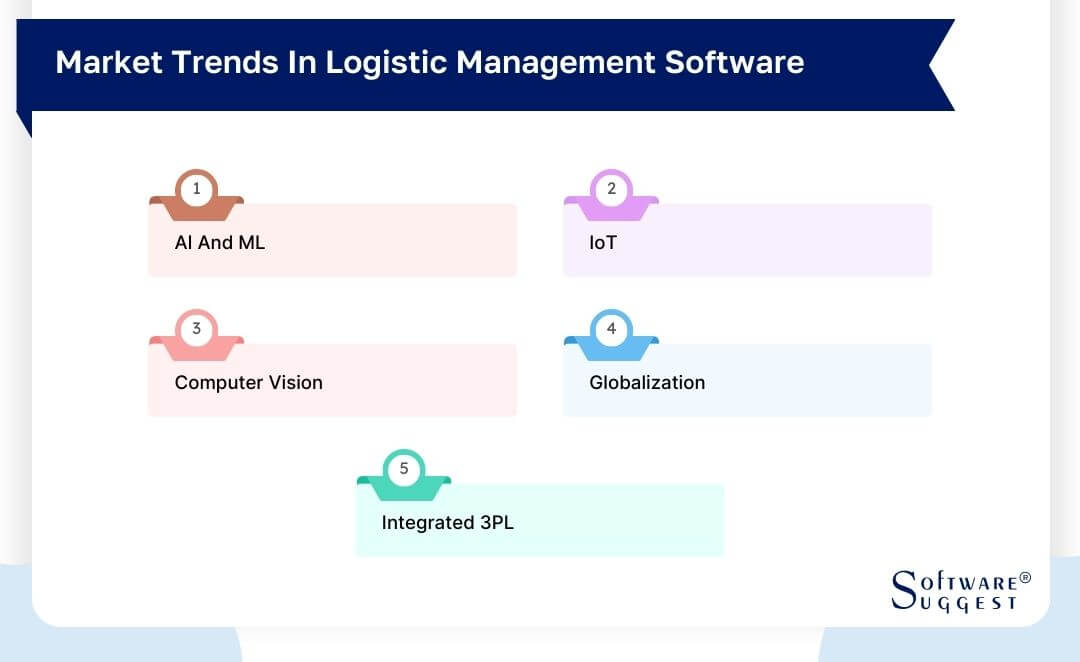
Some latest trends and developments in logistic management software are:
-
AI and ML
As the importance of data in the logistics sector continues to increase, logistics software vendors are adding Artificial Intelligence (AI) and Machine Learning (ML) capabilities to their products. This will enable businesses to better sense of data and make informed decisions.
-
IoT
The Internet of Things (IoT) has emerged as a major trend in the logistics industry. With autonomous hardware devices, such as robots, taking over the logistics space, IoT capabilities allow logistics managers to manage these machines remotely.
-
Computer Vision
Computer Vision (CV) allows logistics managers to monitor vehicles and drivers in real-time. The best logistics solutions support CV, enabling you to get a real-time view of your fleet and drivers.
-
Globalization
Logistics companies are going global to increase revenue and profitability. Modern-day logistics solutions help logistics managers comply when dealing with international customers and vendors.
-
Integrated 3PL
The immense growth of eCommerce has led to the rise of integrated 3PL (third-party logistics) services. The best logistics software now supports API integrations that connect stores and warehouses with fulfillment centers.
Conclusion
In conclusion, logistics software plays a vital role in streamlining supply chain management and transportation operations. Implementing the best logistics software offers substantial benefits, such as improved operations, faster delivery, and enhanced customer service.
Common features like inventory management, transportation management, and supply chain planning contribute to its effectiveness. These logistics planning software cater to diverse business needs.
However, challenges like tracking inconsistencies and limited visibility require attention for smooth and efficient logistics operations. Leveraging logistics software's power enables businesses to gain a competitive edge in the dynamic world of logistics and supply chain management.
Related Articles:
FAQs
The cost of logistics software varies depending on the features and scale required. Monthly subscriptions generally range from $10 to $20,000, with most falling between $200 and $800 per month.
Logistics software can integrate with a wide range of other software and systems to streamline operations and enhance efficiency. Common integrations include transportation management systems (TMS), warehouse management systems (WMS), enterprise resource planning (ERP) software, customer relationship management (CRM) tools, electronic data interchange (EDI) systems, and various e-commerce platforms. These integrations allow for seamless data exchange, real-time tracking, and improved collaboration across different aspects of the supply chain.
The difference between supply chain management (SCM) and logistics management software lies in their scope and focus. SCM software oversees the entire flow of goods and services from origin to consumption, ensuring efficiency throughout the supply chain. On the other hand, logistics management software concentrates specifically on optimizing transportation, warehousing, and distribution processes within the supply chain.
By Countries
By Cities